


More updates on our blog
Customers have asked us so many times whether they can run their own Python scripts on their Android devices. Until now, the answer meant heavy workar...
Raspberry Pi devices that boot from a USB drive or an NVMe SSD can now use Android Verified Boot, the check that makes sure a device only starts softw...
In our current Android implementation, both Raspberry Pi 4 and the Raspberry Pi 5 report an available hardware-accelerated HEVC decoder to the system....
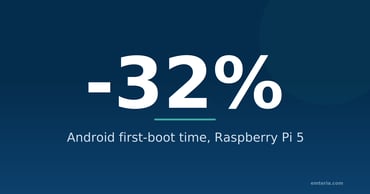
In one of our previous posts we showed how shipping Android's bundled system apps optimized into native code for on a Raspberry Pi 5 can cut the first...
The first boot of a fresh Android image is always the slowest one. Before the launcher appears, the system tries to optimize every installed app on a ...
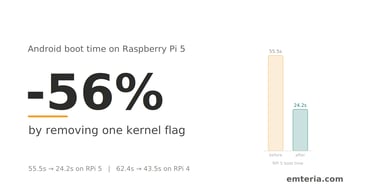
Our Android builds used to take about one minute to reach the home screen on Raspberry Pi 5, which has a quad-core Cortex-A76 at 2.4 GHz. By removing ...
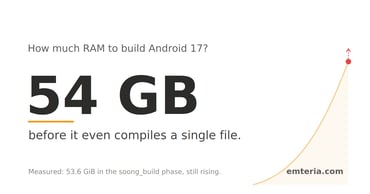
If you are planning to build Android 17 from source, the short answer is that you need more than 55 GiB of RAM, and you need it before the compiler ev...
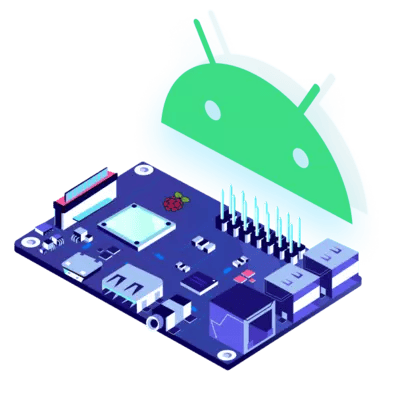
After months of engineering work, we are excited to release major improvements for Android on Raspberry Pi. These updates focus on system stability, p...
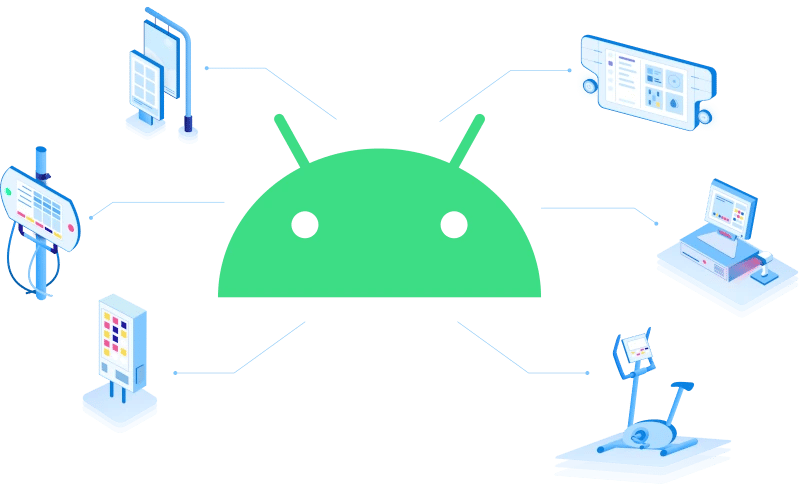
Android OS powers more than just smartphones. Today, it sits at the heart of devices across industries—from medical systems to fitness equipment, from...
Build unique products, boost device performance
Already have hardware?
Start for free